In 2026, tile moves beyond utility and into narrative. Surfaces aren't background players anymore. They're the thing that grounds a room, sets its mood, and tells you something about the people who live there.
The direction this year feels quieter. More intentional. Materials that respond beautifully to natural light. Finishes that age well. Design that feels rooted rather than reactive. We've been paying close attention to what's coming through our showroom, and what our vendors, designers, and customers are reaching for. Here's what's defining the moment.
2026 Tile Trends: The Art of Surface
design
Warmth is everywhere right now, and for good reason. Clay reds, mineral browns, olive undertones, and sun-washed neutrals reflect a broader shift toward interiors that feel lived-in and lasting. Zellige-inspired surfaces and handmade-look ceramic bring nuance through natural variation. No two tiles are precisely alike, and that's the point.
This isn't rustic. It's refined earthiness, elevated by restraint and beautiful alongside honed stone, plaster walls, and warm metals.
The Return of Earth
Pattern, Reimagined
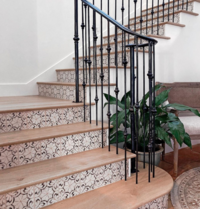
Pattern is back, and it's grown up. Deco influences return in softened palettes of dusty blues, muted terracottas, and chalky greens. Large-scale geometrics replace busy repeats. Floors are becoming focal points again, especially in entryways and boutique-style kitchens.
The approach that works: let the decorative tile lead, and keep everything around it disciplined.
Tile in 2026 is about mood. Texture over trend. Cohesion over contrast. The interiors we're most excited about are softer, deeper, and more experiential, spaces designed to be felt as much as seen.
Whether you're planning a kitchen remodel, a bathroom renovation, or starting from the ground up, the direction is clear: choose materials with integrity. Surfaces that feel considered. Installations that hold their own as the light changes through the day.
The most successful projects we see treat tile not as a finishing touch, but as the foundation of the story. That's how we think about it too, and we'd love to help you find yours.
Flat is fading. Relief tile, including fluted, ribbed, reeded, and softly undulated styles, introduces shadow play that shifts throughout the day. Think elongated vertical stacks in powder baths, curved edges wrapping kitchen islands, and tonal installations that feel carved rather than installed.
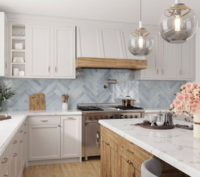
Dimensional ceramic and porcelain adds depth without excess, especially in kitchens and bathrooms where simplicity carries the room.
One thing we've learned: matte finishes amplify depth; gloss highlights form. Pick one and commit.

Industrial Edge 2.0
Concrete-look porcelain has evolved. Less cold loft, more curated atelier. Deep charcoals, warm greys, and smoked taupes create moody, considered backdrops, especially when paired with dark cabinetry and architectural lighting. Oversized formats minimize grout lines and give rooms a seamless, gallery-like finish.
Industrial, but with polish.

Stone, But Smarter
Porcelain keeps getting better at what it does, and in 2026, stone-look tile has richer veining and more authentic movement than ever. Bookmatched slab looks are making a strong case for statement walls, while mixing stone visuals with tactile ceramics creates the kind of layered contrast that makes a space feel designed rather than decorated.
Natural stone and stone-look porcelain remain foundational in high-end kitchen and bathroom work. The luxury is in the layering, not the excess.

The Monochrome Room
Color drenching has arrived on hard surfaces. Bathrooms wrapped floor-to-ceiling in a single hue, whether moss, sand, or slate, create something that feels genuinely immersive. Matching grout is non-negotiable here. The result is custom, architectural, and quietly confident.


Sculptural Dimension
Gloss as Accent
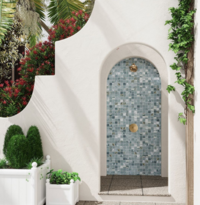
High-gloss tile is back, selectively. Niches, backsplashes, fireplace surrounds. When it sits against a matte expanse, shine feels intentional rather than nostalgic. Light becomes part of the design.